
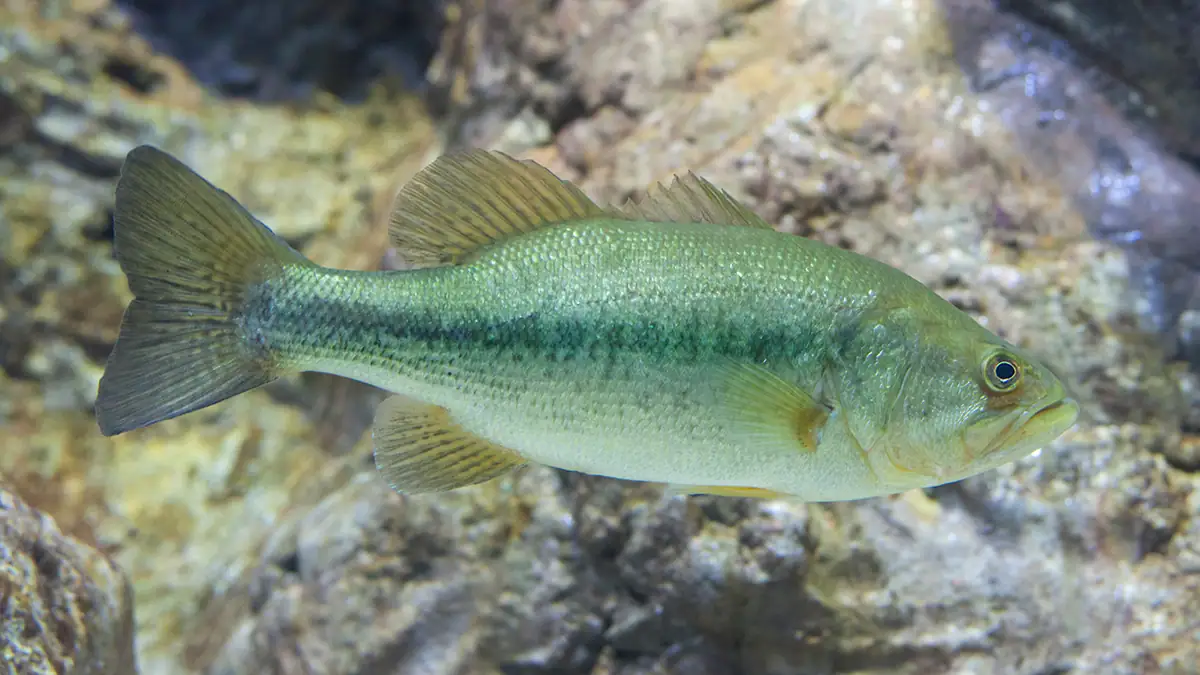
Largemouth Bass
Micropterus salmoides
Iconic freshwater predator known for its explosive strikes and bucket-like mouth. A highly sought-after game fish across North America.
Taste profile
Mild, slightly muddy, white and flaky meat.
How to cook it
Baked
Whole or fillets baked with lemon and herbs.
Grilled
Fillets seasoned and grilled for a smoky flavor.
Fried
Classic method, breaded and pan-fried or deep-fried.
Tips to catch one
- ✔Use topwater lures like frogs or poppers in the early morning or late evening.
- ✔Fish near cover such as weed beds, submerged logs, and docks.
- ✔Texas-rigged plastic worms are a consistently effective choice.
Keep it fresh: bleed, spike & ice
🔪 Spike (Ike Jime)
Insert a spike into the brain cavity just behind and above the eye. The fish will shudder briefly then go still — this signals a clean kill that prevents stress hormones from degrading the flesh.
🩸 Bleed
After spiking, cut one or both gill arches at the gill plate junction. Hold the fish head-down in water for 2–3 minutes. Well-bled fish have whiter, cleaner-tasting fillets with a longer shelf life.
🧊 Ice
Place bled fish in an ice slurry (2 parts ice to 1 part seawater). The slurry cools 5× faster than dry ice alone. Keep the drain plug cracked and aim for core temp below 35 °F within 30 minutes.
Largemouth Bass — specific tips
Bass have delicate, mild flesh that absorbs off-flavors fast. Bleed immediately, remove guts on the water if possible, and ice the body cavity. Skin promptly — the muddy taste most people complain about lives in the skin and lateral-line fat.
Size & bag limits by state
| State | Size limit | Bag limit | Notes |
|---|---|---|---|
| Alabama | — | 10 per day | No statewide min; some lakes have 14" min |
| California | ≥ 12" | 5 per day | — |
| Florida | ≥ 14" | 5 per day | — |
| Georgia | ≥ 12" | 10 per day | — |
| Massachusetts | ≥ 12" | 5 per day | — |
| Michigan | ≥ 14" | 5 per day | — |
| New York | ≥ 12" | 5 per day | — |
| North Carolina | ≥ 14" | 5 per day | — |
| Texas | ≥ 14" | 5 per day | — |
| Virginia | ≥ 12" | 5 per day | — |