
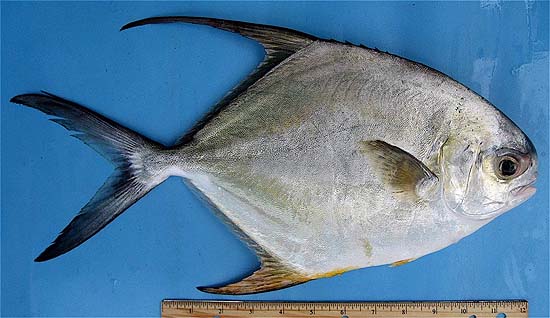
Permit
Trachinotus falcatus
The crown jewel of flats fly-fishing — a large, spooky, silver-bodied member of the pompano family famous for maddening selectivity around crabs and shrimp on tropical flats.
Taste profile
White, slightly oily flesh — good eating but anglers almost universally release permit due to their trophy status.
How to cook it
Release Recommended
Permit are a premier catch-and-release gamefish; most anglers practice C&R.
Grilled
If kept, grill fillets simply with salt, pepper, olive oil, and lime.
Ceviche
Fresh permit makes excellent ceviche with lime, onion, and chili.
Tips to catch one
- ✔Sight-fish the flats of the Florida Keys and Gulf from a poling skiff during high sun.
- ✔Live blue crabs or small crabs on light leaders are the top bait — permit are crab specialists.
- ✔Fly-fishing for permit demands a long, accurate cast with crab patterns (Merkin, EP Crab) led ahead of tailing fish.
- ✔Wrecks and artificial reefs in 60–120 feet hold schools — vertical jig crab imitations.
- ✔Permit spook fast; long fluorocarbon leaders (15–20 ft) and quiet approaches are essential.
Keep it fresh: bleed, spike & ice
🔪 Spike (Ike Jime)
Insert a spike into the brain cavity just behind and above the eye. The fish will shudder briefly then go still — this signals a clean kill that prevents stress hormones from degrading the flesh.
🩸 Bleed
After spiking, cut one or both gill arches at the gill plate junction. Hold the fish head-down in water for 2–3 minutes. Well-bled fish have whiter, cleaner-tasting fillets with a longer shelf life.
🧊 Ice
Place bled fish in an ice slurry (2 parts ice to 1 part seawater). The slurry cools 5× faster than dry ice alone. Keep the drain plug cracked and aim for core temp below 35 °F within 30 minutes.
Permit — specific tips
Usually released, but edible when small. Spike, bleed, and ice like any reef fish. The flesh is firm and mild when properly handled. Remove the thick skin before cooking.
Size & bag limits by state
| State | Size limit | Bag limit | Notes |
|---|---|---|---|
| Florida | ≥ 22" | 2 per day | — |
| Texas | — | — | Very rare; no specific regulation |