
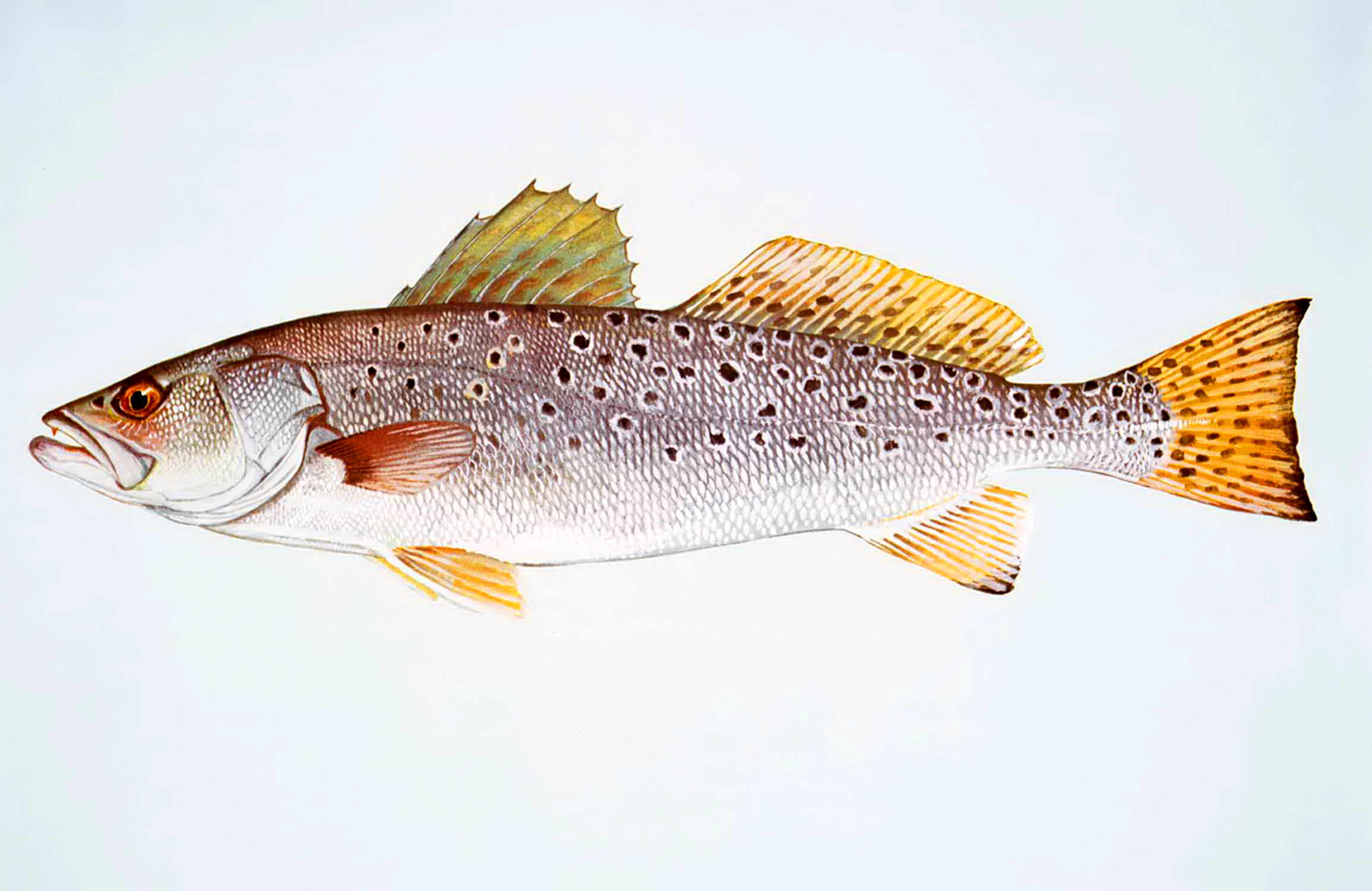
Spotted Seatrout
Cynoscion nebulosus
A member of the drum family, known for its prominent canine teeth and spots on its back. A popular light-tackle game fish.
Taste profile
Mild, delicate flavor with a soft texture. Best eaten fresh as the meat does not freeze well.
How to cook it
Pan-fried
A quick and easy way to cook the delicate fillets.
Broiled
Cooked quickly under the broiler to prevent overcooking.
Ceviche
The delicate flesh is great for ceviche.
Tips to catch one
- ✔Cast topwater lures over grass flats in the early morning.
- ✔Use soft plastic jigs or live shrimp under a popping cork.
- ✔Look for them in areas with good tidal flow and baitfish activity.
Keep it fresh: bleed, spike & ice
🔪 Spike (Ike Jime)
Insert a spike into the brain cavity just behind and above the eye. The fish will shudder briefly then go still — this signals a clean kill that prevents stress hormones from degrading the flesh.
🩸 Bleed
After spiking, cut one or both gill arches at the gill plate junction. Hold the fish head-down in water for 2–3 minutes. Well-bled fish have whiter, cleaner-tasting fillets with a longer shelf life.
🧊 Ice
Place bled fish in an ice slurry (2 parts ice to 1 part seawater). The slurry cools 5× faster than dry ice alone. Keep the drain plug cracked and aim for core temp below 35 °F within 30 minutes.
Spotted Seatrout — specific tips
Very soft flesh that deteriorates fast in heat. Spike, bleed, and ice within minutes of landing. Fillet soon — the belly walls are thin and gut enzymes break through quickly. Handle fillets gently; they shred easily.
Size & bag limits by state
| State | Size limit | Bag limit | Notes |
|---|---|---|---|
| Alabama | ≥ 15" | 6 per day | — |
| Florida | ≥ 15" | 3 per day | Slot 15"-20"; 1 over 20" allowed |
| Georgia | ≥ 14" | 8 per day | — |
| Louisiana | ≥ 12" | 25 per day | — |
| Mississippi | ≥ 13" | 15 per day | — |
| North Carolina | ≥ 14" | 4 per day | — |
| South Carolina | ≥ 14" | 10 per day | — |
| Texas | ≥ 15" | 5 per day | Slot 15"-25"; 1 over 25" per day |
| Virginia | ≥ 14" | 5 per day | — |