
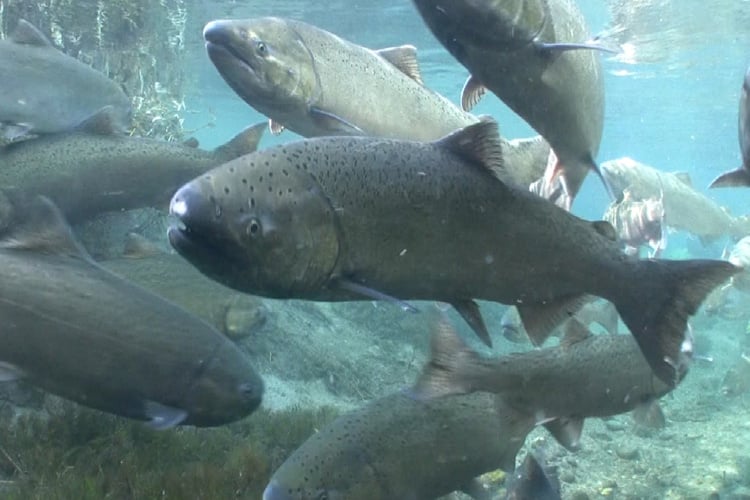
Chinook Salmon (King Salmon)
Oncorhynchus tshawytscha
The largest and most prized of the Pacific salmon species. Known for its long, powerful runs and rich, flavorful meat.
Taste profile
Rich, buttery flavor with a high oil content and firm, orange-red flesh.
How to cook it
Grilled
A classic method that complements the rich flavor.
Smoked
Hot or cold smoked, a world-renowned delicacy.
Baked/Roasted
Cooked whole or as fillets with simple seasonings.
Tips to catch one
- ✔In the ocean, troll with herring, anchovies, or large plugs and spoons.
- ✔In rivers, use roe (salmon eggs), plugs, or flies.
- ✔Target deep holes and current seams in rivers.
Keep it fresh: bleed, spike & ice
🔪 Spike (Ike Jime)
Insert a spike into the brain cavity just behind and above the eye. The fish will shudder briefly then go still — this signals a clean kill that prevents stress hormones from degrading the flesh.
🩸 Bleed
After spiking, cut one or both gill arches at the gill plate junction. Hold the fish head-down in water for 2–3 minutes. Well-bled fish have whiter, cleaner-tasting fillets with a longer shelf life.
🧊 Ice
Place bled fish in an ice slurry (2 parts ice to 1 part seawater). The slurry cools 5× faster than dry ice alone. Keep the drain plug cracked and aim for core temp below 35 °F within 30 minutes.
Size & bag limits by state
| State | Size limit | Bag limit | Notes |
|---|---|---|---|
| Alaska | — | 1 per day | Varies widely by area and run; check ADF&G |
| California | ≥ 24" | 2 per day | Ocean season only; check CDFW for river closures |
| Michigan | ≥ 10" | 3 per day | Great Lakes tributaries; check DNR for specific waters |
| Oregon | ≥ 24" | 2 per day | Varies by river/season; some C&R only |
| Washington | ≥ 24" | 2 per day | Varies by area/season; check WDFW regulations |