
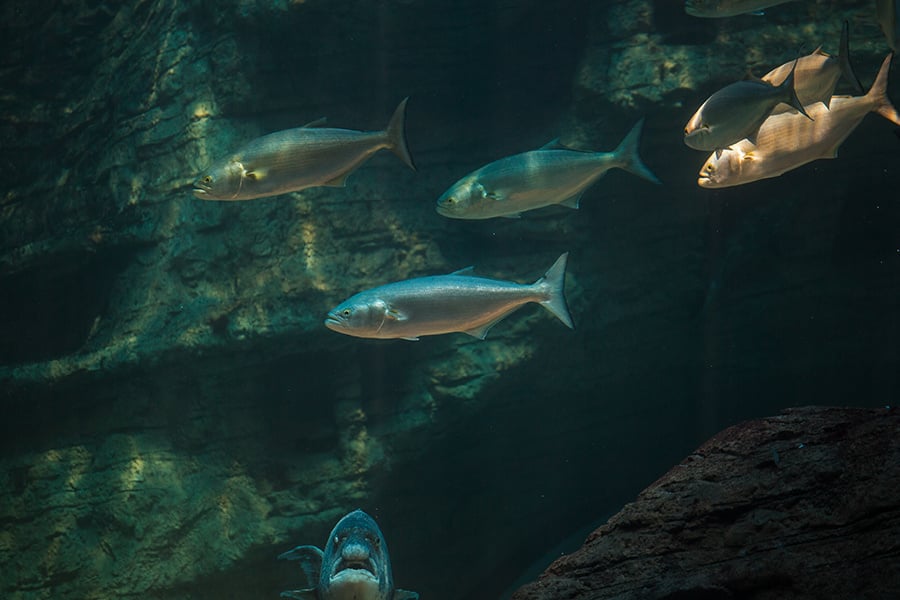
Bluefish
Pomatomus saltatrix
Aggressive, powerful pelagic predator of the Atlantic coast, famous for blitzing baitfish near beaches and inlets. A staple of surf and boat anglers from Maine to Florida.
Taste profile
Rich, oily, strong flavor with dark meat that benefits from bleeding and icing immediately.
How to cook it
Smoked
Outstanding smoked with cherry or apple wood, producing a rich, flavorful dip.
Grilled
Bleed, ice, and grill fresh fillets with citrus and olive oil to balance the oiliness.
Broiled
Quick high-heat broiling with mustard or mayo crust keeps the oily flesh tender.
Tips to catch one
- ✔Look for diving birds and bait blowups at dawn and dusk along Atlantic beaches.
- ✔Use wire leaders — their razor-sharp teeth will cut through mono instantly.
- ✔Metal lures, diamond jigs, and topwater poppers produce explosive strikes.
- ✔Bleed immediately after catching for the best table quality.
Keep it fresh: bleed, spike & ice
🔪 Spike (Ike Jime)
Insert a spike into the brain cavity just behind and above the eye. The fish will shudder briefly then go still — this signals a clean kill that prevents stress hormones from degrading the flesh.
🩸 Bleed
After spiking, cut one or both gill arches at the gill plate junction. Hold the fish head-down in water for 2–3 minutes. Well-bled fish have whiter, cleaner-tasting fillets with a longer shelf life.
🧊 Ice
Place bled fish in an ice slurry (2 parts ice to 1 part seawater). The slurry cools 5× faster than dry ice alone. Keep the drain plug cracked and aim for core temp below 35 °F within 30 minutes.
Size & bag limits by state
| State | Size limit | Bag limit | Notes |
|---|---|---|---|
| Connecticut | — | 3 per day | — |
| Delaware | — | 3 per day | — |
| Florida | ≥ 12" | 10 per day | — |
| Maryland | — | 3 per day | — |
| Massachusetts | — | 3 per day | — |
| New Jersey | — | 3 per day | — |
| New York | — | 3 per day | 3 per person for shore/private boat; 5 on for-hire vessels |
| North Carolina | — | 3 per day | — |
| Rhode Island | — | 3 per day | — |
| Virginia | — | 3 per day | — |