
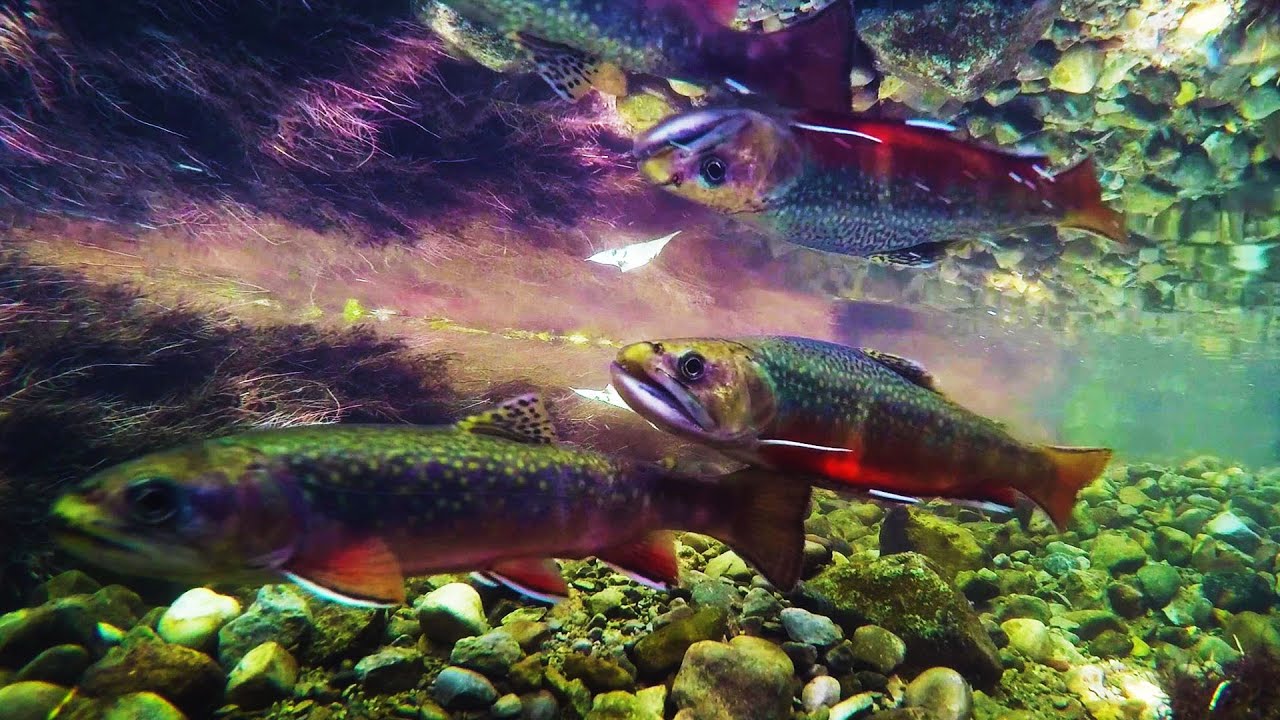
Brook Trout
Salvelinus fontinalis
A native char species with stunning markings, often called 'brookies.' They are sensitive to pollution and require clean, cold water.
Taste profile
Very delicate, sweet flavor, considered one of the best-tasting freshwater fish.
How to cook it
Pan-fried
The classic way to cook brook trout, often with bacon fat.
Campfire-style
Cooked whole on a stick over an open fire.
Baked
Stuffed with herbs and lemon and baked.
Tips to catch one
- ✔Use light tackle and small lures or flies.
- ✔Approach streams with stealth as they are easily spooked.
- ✔Target deep pools and undercut banks.
Keep it fresh: bleed, spike & ice
🔪 Spike (Ike Jime)
Insert a spike into the brain cavity just behind and above the eye. The fish will shudder briefly then go still — this signals a clean kill that prevents stress hormones from degrading the flesh.
🩸 Bleed
After spiking, cut one or both gill arches at the gill plate junction. Hold the fish head-down in water for 2–3 minutes. Well-bled fish have whiter, cleaner-tasting fillets with a longer shelf life.
🧊 Ice
Place bled fish in an ice slurry (2 parts ice to 1 part seawater). The slurry cools 5× faster than dry ice alone. Keep the drain plug cracked and aim for core temp below 35 °F within 30 minutes.
Brook Trout — specific tips
Extremely delicate flesh — handle gently, spike, bleed, and ice immediately. Keep whole until ready to cook. These small fish lose quality fastest of all trout species.
Size & bag limits by state
| State | Size limit | Bag limit | Notes |
|---|---|---|---|
| Maine | ≥ 6" | 5 per day | General law; varies by water |
| Massachusetts | — | 3 per day | — |
| New Hampshire | ≥ 6" | 5 per day | — |
| New York | ≥ 8" | 5 per day | — |
| North Carolina | ≥ 7" | 4 per day | Hatchery-supported waters; native waters more restrictive |
| Pennsylvania | ≥ 7" | 5 per day | — |
| Virginia | ≥ 6" | 6 per day | — |