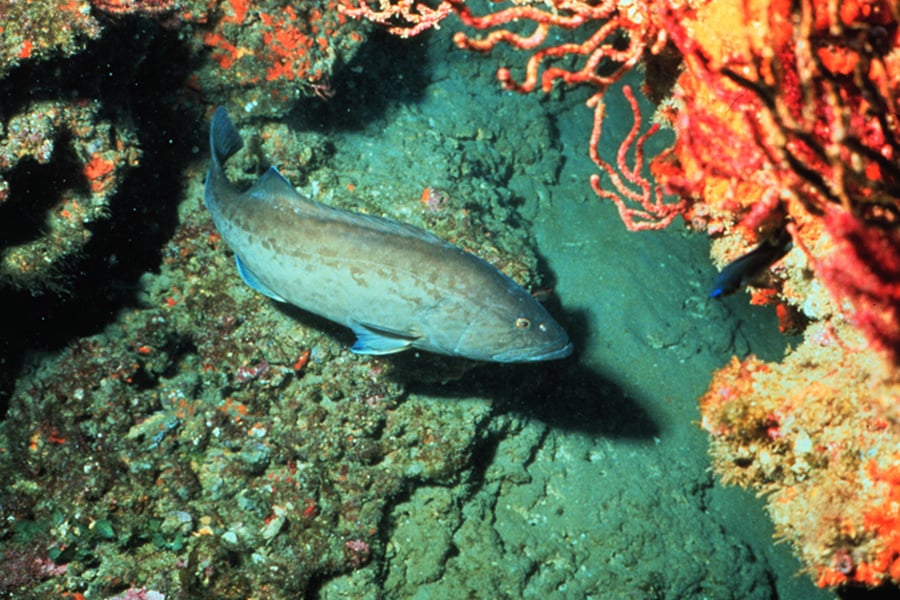
Gag Grouper
Mycteroperca microlepis
Powerful reef predator of the Gulf and South Atlantic. Known for diving straight into structure when hooked — classic bottom-fishing battle.
Taste profile
Firm, mild, sweet white meat — premier grouper sandwich fish of the Gulf Coast.
How to cook it
Blackened
Blackened grouper sandwiches are a Florida icon.
Grilled
Thick fillets grill beautifully with lemon, garlic, and olive oil.
Fried
Beer-battered grouper makes a legendary fish sandwich.
Baked
Bake in a piccata or lemon-butter sauce for an elegant dinner.
Tips to catch one
- ✔Fish rocky reefs, wrecks, and ledges in 60–250 feet of water.
- ✔Live bait (pinfish, grunts, squirrelfish) outproduces dead bait for big fish.
- ✔Use heavy 50-lb class tackle — they will bury you in the rocks instantly.
- ✔Reel hard the first few cranks to pull them away from structure.
- ✔Descending devices required in federal Gulf waters for released fish.
Keep it fresh: bleed, spike & ice
🔪 Spike (Ike Jime)
Insert a spike into the brain cavity just behind and above the eye. The fish will shudder briefly then go still — this signals a clean kill that prevents stress hormones from degrading the flesh.
🩸 Bleed
After spiking, cut one or both gill arches at the gill plate junction. Hold the fish head-down in water for 2–3 minutes. Well-bled fish have whiter, cleaner-tasting fillets with a longer shelf life.
🧊 Ice
Place bled fish in an ice slurry (2 parts ice to 1 part seawater). The slurry cools 5× faster than dry ice alone. Keep the drain plug cracked and aim for core temp below 35 °F within 30 minutes.
Size & bag limits by state
| State | Size limit | Bag limit | Notes |
|---|---|---|---|
| Alabama | ≥ 24" | 2 per day | — |
| Florida | ≥ 24" | 2 per day | Gulf season Sep-Dec; Atlantic season May-Dec (may vary) |
| Georgia | ≥ 24" | 2 per day | — |
| Mississippi | ≥ 24" | 2 per day | — |
| North Carolina | ≥ 24" | 1 per day | — |
| South Carolina | ≥ 24" | 3 per day | — |