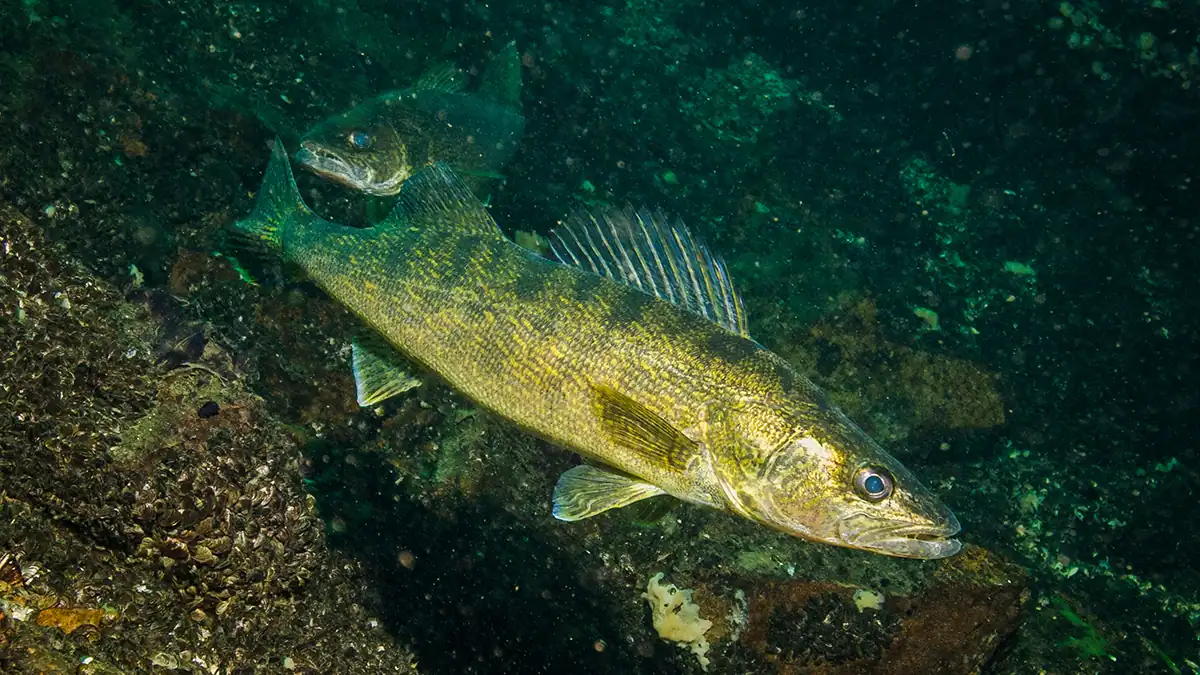
Walleye
Sander vitreus
A predatory fish with large, glassy eyes that allow it to see well in low light. Prized for its delicious, flaky white meat.
Taste profile
Mild, sweet, and firm with a clean taste. Often considered one of the best-eating freshwater fish.
How to cook it
Fried
The most popular method, either pan-fried or deep-fried.
Baked
Fillets baked with butter and breadcrumbs.
Shore Lunch
A traditional preparation of fried walleye, potatoes, and onions cooked over a fire.
Tips to catch one
- ✔Fish during low-light periods like dawn, dusk, or on overcast days.
- ✔Use jigs tipped with minnows or leeches, trolled or drifted near the bottom.
- ✔Target drop-offs, humps, and other underwater structures.
Keep it fresh: bleed, spike & ice
🔪 Spike (Ike Jime)
Insert a spike into the brain cavity just behind and above the eye. The fish will shudder briefly then go still — this signals a clean kill that prevents stress hormones from degrading the flesh.
🩸 Bleed
After spiking, cut one or both gill arches at the gill plate junction. Hold the fish head-down in water for 2–3 minutes. Well-bled fish have whiter, cleaner-tasting fillets with a longer shelf life.
🧊 Ice
Place bled fish in an ice slurry (2 parts ice to 1 part seawater). The slurry cools 5× faster than dry ice alone. Keep the drain plug cracked and aim for core temp below 35 °F within 30 minutes.
Walleye — specific tips
Spike and bleed for the prized white fillets. Walleye is best filleted as soon as practical and placed skin-side down on ice in a zip bag. Avoid soaking fillets in meltwater — the lean flesh absorbs water and turns mushy.
Size & bag limits by state
| State | Size limit | Bag limit | Notes |
|---|---|---|---|
| Michigan | ≥ 15" | 5 per day | — |
| Minnesota | ≥ 15" | 6 per day | Varies by lake; check DNR |
| New York | ≥ 15" | 5 per day | — |
| Ohio | ≥ 15" | 6 per day | — |
| Pennsylvania | ≥ 15" | 6 per day | — |
| Wisconsin | ≥ 15" | 5 per day | — |