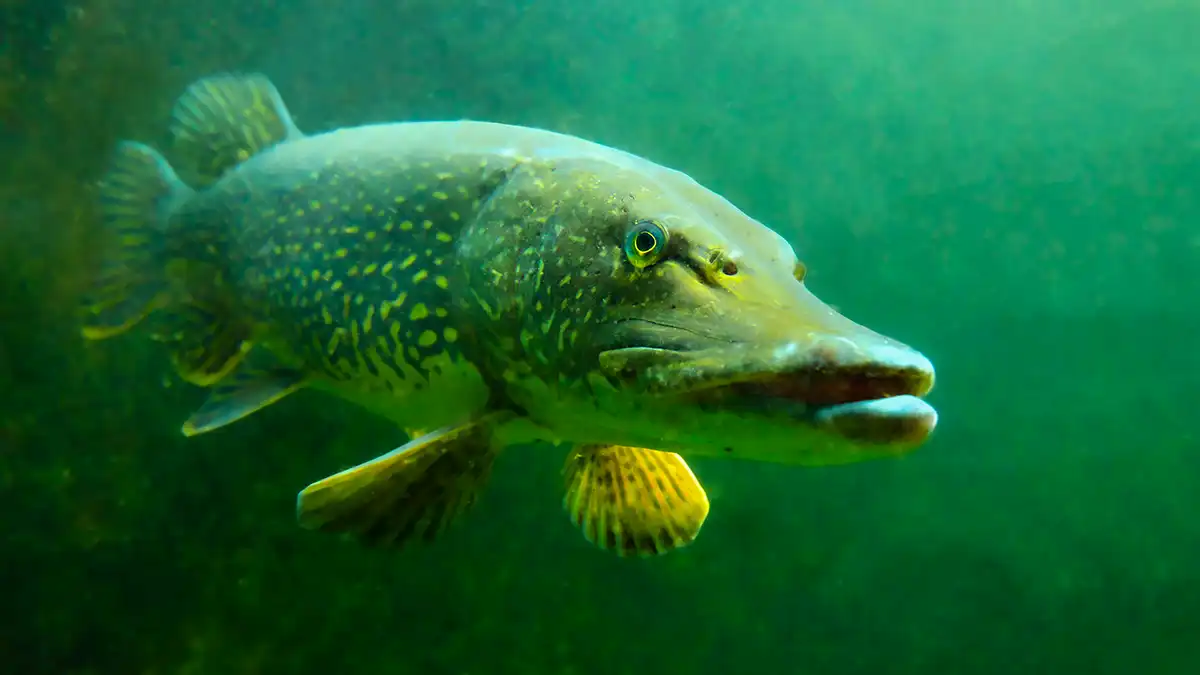
Northern Pike
Esox lucius
A long, powerful predator with a mouthful of sharp teeth. Known for its aggressive strikes and thrilling fights.
Taste profile
White, flaky meat, but can be bony. Proper cleaning (removing the Y-bones) is key.
How to cook it
Pickled
A traditional way to deal with the bones and firm up the flesh.
Baked
Baked with stuffing to add moisture and flavor.
Fried
After de-boning, the fillets are excellent fried.
Tips to catch one
- ✔Use large, flashy lures like spoons, spinners, and crankbaits.
- ✔A steel leader is essential to prevent their sharp teeth from cutting the line.
- ✔Target weed beds, drop-offs, and other ambush points.
Keep it fresh: bleed, spike & ice
🔪 Spike (Ike Jime)
Insert a spike into the brain cavity just behind and above the eye. The fish will shudder briefly then go still — this signals a clean kill that prevents stress hormones from degrading the flesh.
🩸 Bleed
After spiking, cut one or both gill arches at the gill plate junction. Hold the fish head-down in water for 2–3 minutes. Well-bled fish have whiter, cleaner-tasting fillets with a longer shelf life.
🧊 Ice
Place bled fish in an ice slurry (2 parts ice to 1 part seawater). The slurry cools 5× faster than dry ice alone. Keep the drain plug cracked and aim for core temp below 35 °F within 30 minutes.
Size & bag limits by state
| State | Size limit | Bag limit | Notes |
|---|---|---|---|
| Maine | — | 2 per day | Invasive in many Maine waters; removal encouraged |
| Michigan | ≥ 24" | 5 per day | — |
| Minnesota | — | 10 per day | Varies by zone; 1 over 36" on some waters |
| New York | ≥ 24" | 5 per day | — |
| Wisconsin | ≥ 24" | 5 per day | — |