
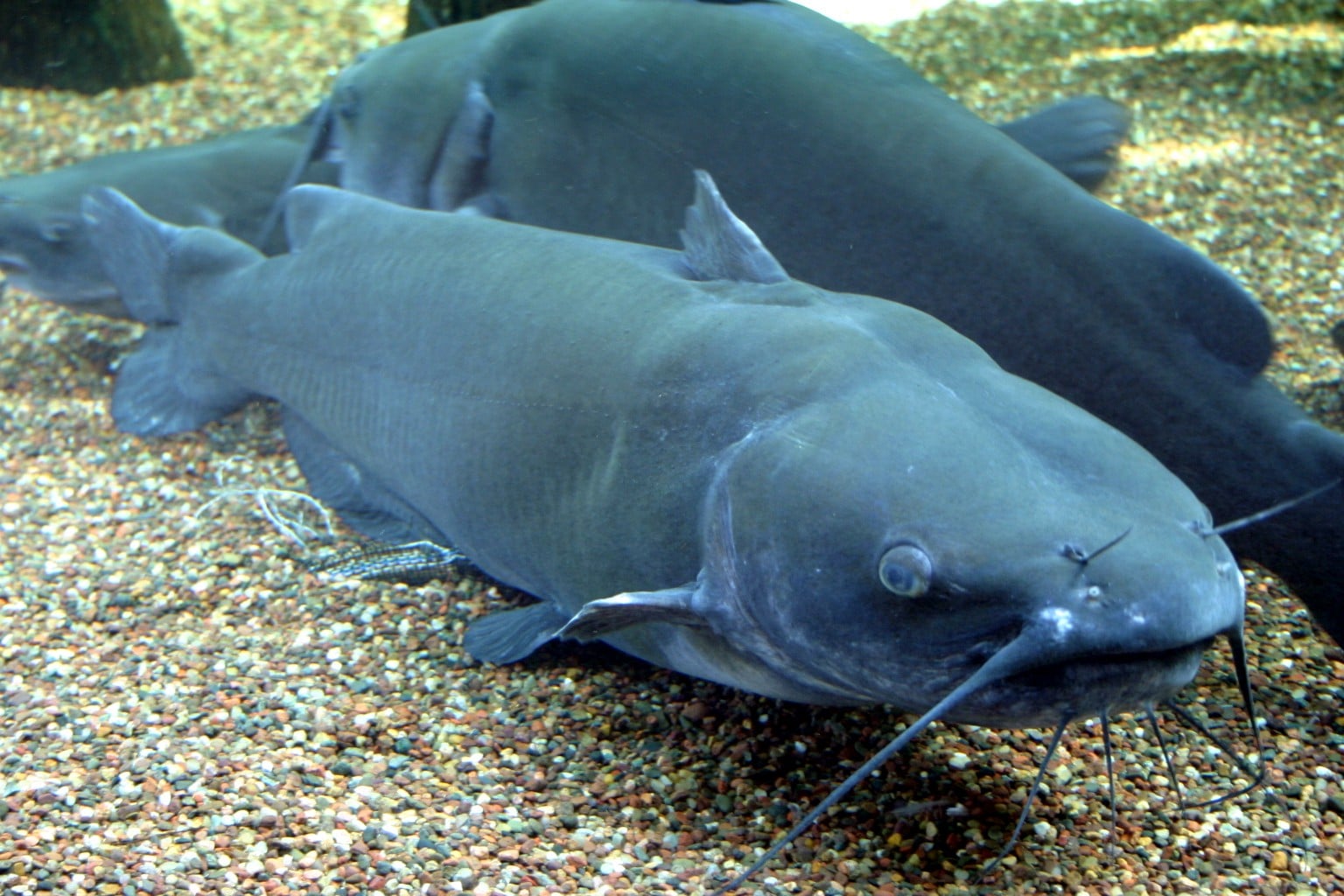
Channel Catfish
Ictalurus punctatus
A popular sport fish with distinctive 'whiskers' (barbels) used to locate food. They are strong fighters and excellent table fare.
Taste profile
Mild, sweet, and firm. The taste can be influenced by water quality.
How to cook it
Fried
The quintessential way to cook catfish, often with a cornmeal breading.
Blackened
Seasoned with Cajun spices and seared in a hot skillet.
Grilled
Catfish fillets hold up well on the grill.
Tips to catch one
- ✔Use strong-smelling baits like chicken livers, cut bait, or stink baits.
- ✔Fish on the bottom, especially in deeper holes or near current.
- ✔Night fishing is often very productive.
Keep it fresh: bleed, spike & ice
🔪 Spike (Ike Jime)
Insert a spike into the brain cavity just behind and above the eye. The fish will shudder briefly then go still — this signals a clean kill that prevents stress hormones from degrading the flesh.
🩸 Bleed
After spiking, cut one or both gill arches at the gill plate junction. Hold the fish head-down in water for 2–3 minutes. Well-bled fish have whiter, cleaner-tasting fillets with a longer shelf life.
🧊 Ice
Place bled fish in an ice slurry (2 parts ice to 1 part seawater). The slurry cools 5× faster than dry ice alone. Keep the drain plug cracked and aim for core temp below 35 °F within 30 minutes.
Channel Catfish — specific tips
Spike behind the skull plate, bleed thoroughly — catfish blood gives a strong, muddy taste if left in. Remove skin immediately (use pliers). Trim all red/dark meat and belly fat for the mildest flavor. Ice in a slurry.
Size & bag limits by state
| State | Size limit | Bag limit | Notes |
|---|---|---|---|
| Alabama | — | — | Varies by water; generally liberal limits |
| California | — | — | No statewide limits; check local regulations |
| Florida | — | — | No statewide limits |
| Michigan | — | — | No statewide limits |
| New York | — | — | Varies by waterbody |
| Texas | ≥ 12" | 25 per day | — |